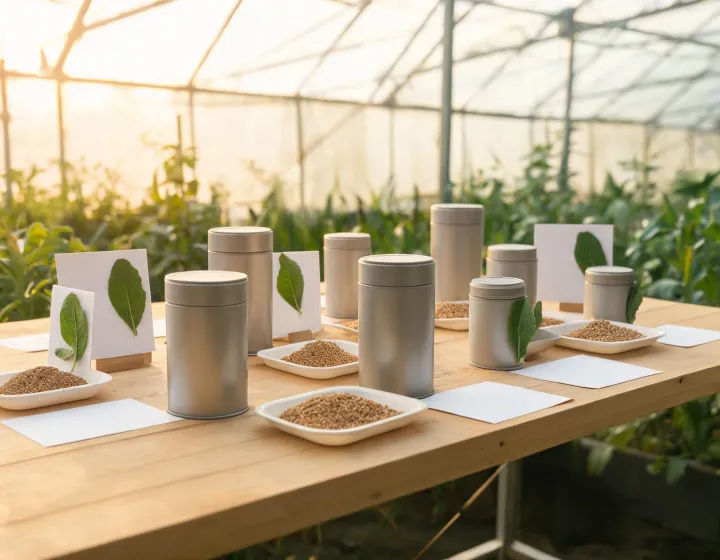
Name, CAS and formulation
Write the common name, CAS number if known, and whether the request is a technical material, EC, SC, WG, SL or adjuvant. Similar trade names can hide different solvents, safeners or particle size targets.
INDEPENDENT SOURCING PARTNER
Agrochemical Sourcing helps US distributors, formulators and industrial buyers turn a crop-protection brief into a comparable factory request. We coordinate outreach and wholesale quotation comparison. We do not manufacture actives, hold packaged inventory, or act as an authorized registrant.
| 5 | identity checks frozen before factory outreach |
|---|---|
| 14 | specification questions kept on one comparison row |
| 13 | pack and US destination notes compared together |
| 8 | SDS, TDS and CoA file questions left visible |
| 15 | open assay or transport items we still flag |
WHAT THE FIRST BRIEF MUST HOLD
A product-family name is not a purchase specification. Record the exact agrochemical grade, then ask each candidate to confirm active ingredient, assay, packaging and unresolved documents on the same basis.
Write the common name, CAS number if known, and whether the request is a technical material, EC, SC, WG, SL or adjuvant. Similar trade names can hide different solvents, safeners or particle size targets.
State the requested assay, purity or concentration, plus moisture, trace metals or pH limits that matter to blending. Leave the field open if the buyer wants the factory to propose, then keep that proposal on a separate line.
Define kilograms, liters, drums, bags or IBCs, net content, inner material and pallet pattern. A 200 L drum and a 20 L jerrycan are different logistics and labeling problems even when the assay matches.
Ask for the current safety data sheet, technical data sheet and certificate of analysis layout for the exact quoted product. Related-grade paperwork is not evidence for this SKU.
WHERE BUYERS USUALLY START
These rows describe how US buyers typically use crop-protection inputs. They are not a claim that a particular active, registration or package is available from this site.
What to freeze: technical material identity, assay window, solvent compatibility.
Still open until quoted: UN number, flash point, viscosity and incoming CoA fields.
What to freeze: finished pack size, labeling language, pallet height.
Still open until quoted: DOT or IMDG class, shelf-life statement, inner pack material.
What to freeze: sample mass, crop or use note, acceptance lab.
Still open until quoted: whether the sample matches commercial production assay.
What to freeze: destination state, requested timing, Incoterm preference.
Still open until quoted: TSCA statement, duties, freight scope and exclusions.
Map the application to RFQ fields · Read the procurement brief
COMPLIANCE QUESTIONS, NOT SITE CREDENTIALS
These answers belong to the quoted SKU. They are not certificates of Agrochemical Sourcing and they do not close a purchase on their own.
No. Request the safety data sheet for the quoted concentration and formulation. A document from another manufacturer, pack size or solvent system does not describe the material you are comparing.
Ask the supplier to state TSCA status for US supply and REACH status where applicable, then keep the answer bound to the exact product. This website does not borrow competitor certificates as its own.
Supplier ISO 9001 or GMP evidence may be relevant for some scopes, but it is not a substitute for assay, CoA fields, packaging and transport classification on this order.
UN number, flash point and DOT or IMDG class follow the exact SDS. Handling, storage and carriage must follow that document, applicable rules and the carrier. This page does not give mixing or application instructions.
Share specification, quantity, packaging and US destination. We compare wholesale quotations on that same basis. No lowest-price or savings percentage is promised.
See quote matching · Open the specification brief · Use the RFQ desk